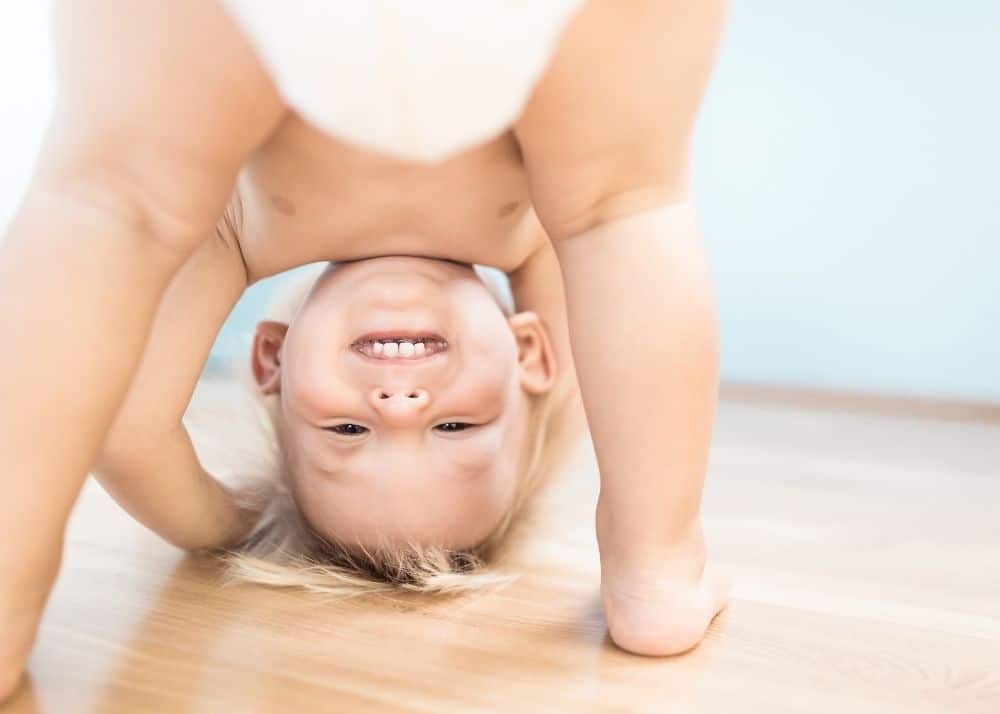
Why Babies Bend Over and Look Through Their Legs

You’re playing with your toddler when — out of nowhere — they fold in half and peer at you upside down between their legs. They giggle. You giggle. And then you pause: is this just a silly game… or does it mean something more?
From playful exploration to wild superstitions (hello, “predicting pregnancy”), this strange little move has sparked curiosity in new parents for generations.
I remember the first time my son did this. He was about 18 months old, and it became his new party trick. Just a few weeks later — surprise — I found out I was pregnant with his baby sister. Total coincidence? Probably. But I’ll admit, it still gives me chills.
In this post, we’ll break down what this behavior usually means from a developmental perspective, what the old wives’ tale says (and how much weight to give it), and when — if ever — it’s something to be concerned about.
Let’s look at what’s going on behind your baby’s upside-down view of the world.
This post contains affiliate links, which means I receive a small commission, at no extra cost to you, if you make a purchase using this link. Please see my disclosure for more details.
Why Do Babies Bend Over and Look Through Their Legs?
While it may look like your toddler is gearing up for baby yoga, bending over and peeking through their legs is a totally normal behavior. In fact, it’s one of those weirdly adorable phases that almost every child goes through.
When my daughter started doing this, she would do it in the middle of the grocery store — socks half off, belly out, looking at the world like she was in a circus act. And every time, it cracked me up. But also? It made me wonder why this move was suddenly so important to her.
There are a few common reasons toddlers do this:
Physical Development
Around 14–18 months, toddlers begin experimenting with movement in new ways. Bending over without falling takes strength, balance, and coordination — all milestones they’re starting to hit. This position helps them:
- Stretch their legs and core
- Build gross motor skills
- Explore new perspectives on their environment
It can even be the early stages of tumbling or climbing behaviors. If your little one loves doing this after bouncing on the couch or crawling through tunnels, it’s likely just part of their natural physical play.
Mimicking Behavior
Toddlers are expert copycats. If they’ve seen an older sibling doing cartwheels or watched you stretch during yoga, don’t be surprised if they try it too. What starts as imitation quickly becomes a source of laughter and repetition.
Exploring a New View
The world looks totally different upside down — and for toddlers who are just figuring out how it all works, that shift in perspective is fascinating. The floor becomes the ceiling, legs become towers. It’s curiosity at its finest.
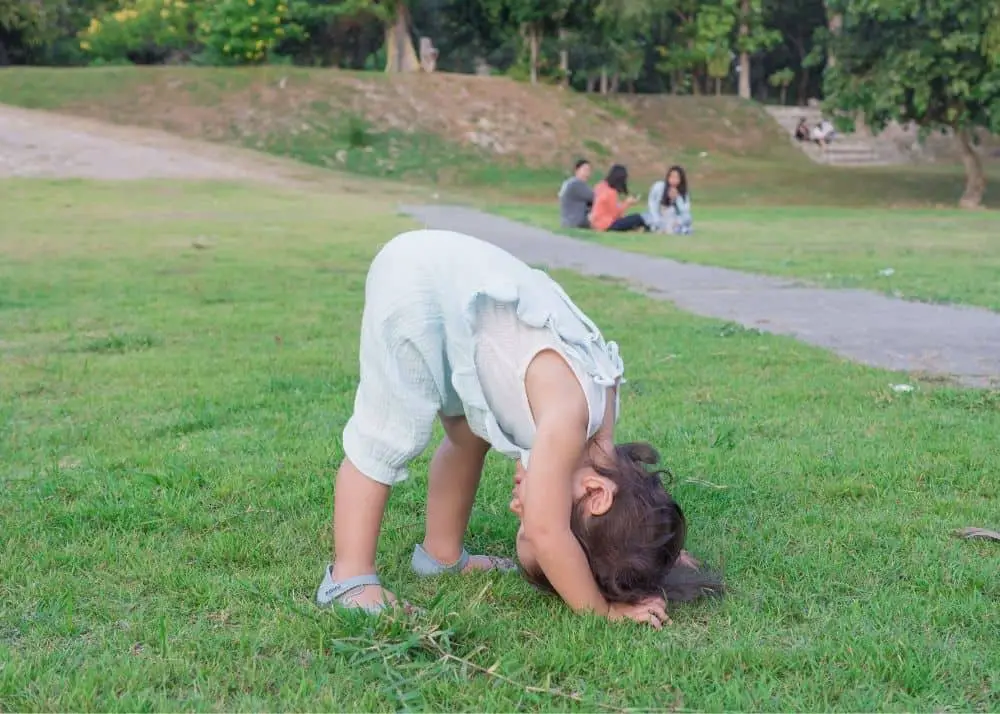
The Old Wives’ Tale: Is Your Baby Predicting Pregnancy?
If you’re in any parenting Facebook group, you’ve probably seen this pop up: “My toddler started bending over and looking between their legs — am I pregnant?” It sounds ridiculous… until it happens to you.
According to an old wives’ tale, when a baby bends over and peers through their legs, they’re “looking” for their future sibling. Some say it means someone in the household is pregnant — or will be soon.
I’ll admit, I rolled my eyes when I first heard it. But then, my son — about 18 months old at the time — started doing this nonstop. It was almost a game: bend, peek, giggle. And then, not long after… yep. I found out I was pregnant with his little sister.
Now, let’s be real — there’s zero science to back this up. It’s not a sign from the universe, and your child isn’t psychic. But there’s something undeniably sweet about the folklore. It’s a moment of connection across generations, the kind of parenting story your mom or grandma might have told.
So is it true? Probably not. Is it fun to think about? Absolutely. And if nothing else, it’s a great story to share at playgroup.
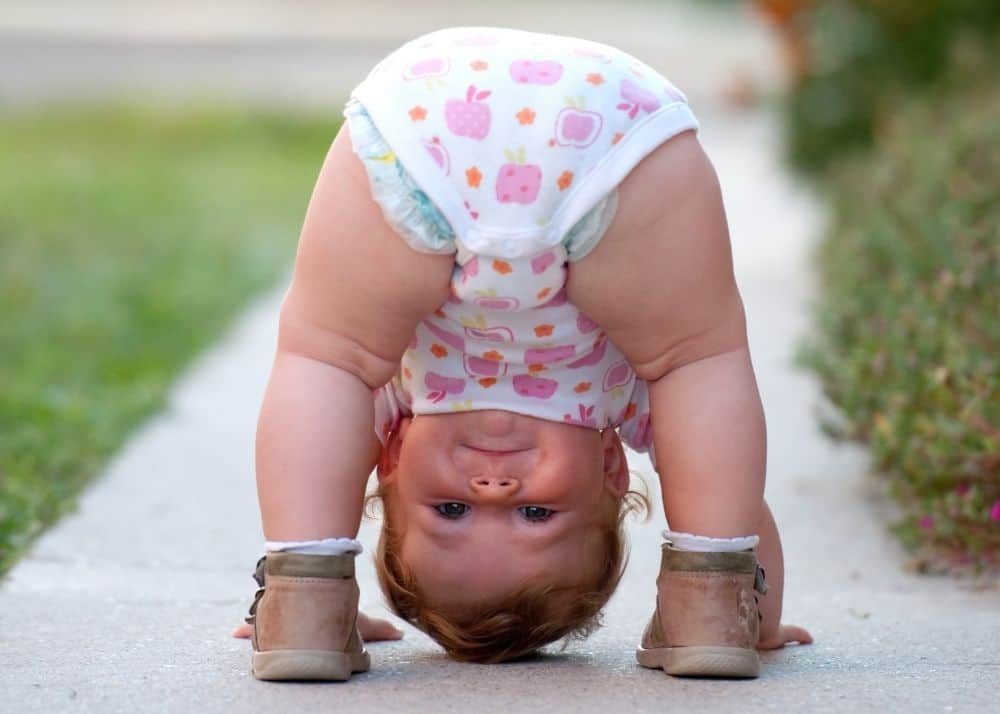
When to Call a Pediatrician About This Behavior
Most of the time, your toddler’s upside-down antics are harmless — and even a positive sign of motor development. But occasionally, it can be worth a second look.
Here are a few red flags to watch for:
- Visible pain or discomfort
If your child winces, cries, or avoids bending over after doing it once, it could indicate a pulled muscle or another physical issue. - Unusual spine curvature
When they bend forward, their back should look smooth and rounded. A pronounced curve or asymmetry could be worth checking out — especially if you haven’t noticed it before. - Frequent falling or poor balance
Toddlers wobble, of course — it’s part of learning to walk. But if your child seems to fall often only when doing this movement, or is delayed in hitting other gross motor milestones, it’s time to talk to your pediatrician.
None of these signs mean something is definitely wrong — but they’re worth a quick call or visit to rule out any underlying issues. You know your child best, and if your gut says something’s off, listen to it.
Most pediatricians will tell you this position is just a phase — and a funny one at that. But when in doubt? Always ask..
FAQs About Babies Bending Over
Your Baby’s Upside-Down View of the World
When your baby bends over and peeks through their legs, it’s usually nothing more than play and curiosity. They’re testing their balance, stretching their little bodies, or just seeing the world in a new way.
And yes, there’s the old wives’ tale about predicting pregnancy. I’ve even lived it — my son started doing this at 18 months, and not long after we found out he’d have a baby sister. Whether you believe it or not, it’s a fun story to keep in the back of your mind.
Unless you notice pain, imbalance, or spine issues, this pose is a harmless (and pretty adorable) part of toddlerhood.
So next time it happens? Bend down and join them. The world looks pretty magical from their perspective.
And if your little one is about to become a big sibling — or you just want a smoother transition for everyone — you might enjoy this post on what worked (and what didn’t) when we introduced our toddler to their new baby sibling. It’s full of honest tips and things I wish I’d known sooner.